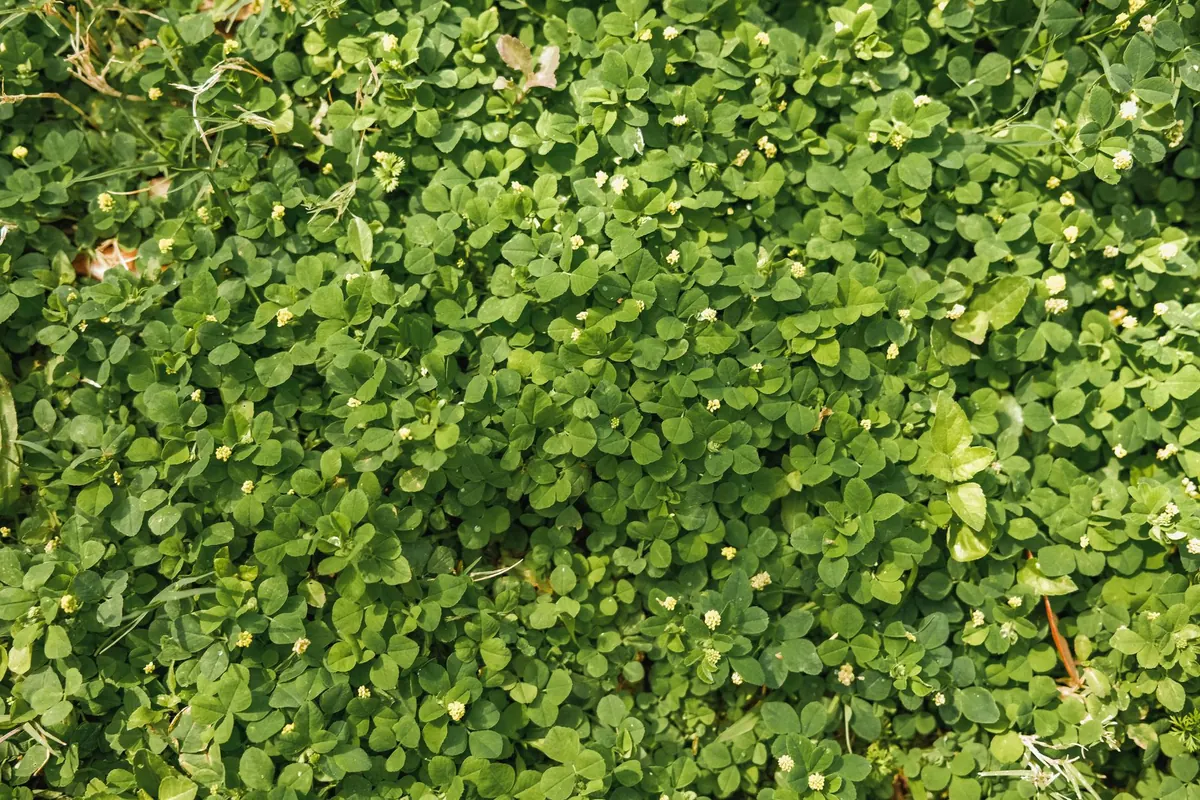
Clover has a reputation problem. Generations of gardeners were taught to treat it as a lawn weed, something to be dug out or dosed with weedkiller. Yet the qualities that make it stubborn in turf — creeping stems, deep roots, tolerance of poor soil — are exactly what make it useful in a vegetable bed or border.
Sown on purpose, clover works as living mulch, green manure and pollinator plant at once. Its roots partner with soil bacteria to fix nitrogen from the air, its low mat of leaves shades out weeds and holds moisture, and its flowers feed bees long after the spring blossom has finished. Get the pairings right and it earns its space. Get them wrong — sowing it among tender seedlings, or letting it swamp a slow-growing crop — and it becomes the nuisance you remember.
Here are ten garden plants that thrive alongside clover, plus the practical detail that makes each pairing work.
Clover belongs to the pea family, and like peas and beans it forms nodules on its roots where bacteria convert atmospheric nitrogen into a form plants can use. Cut the clover back or let it die down and that nitrogen is released for whatever grows next. Its other virtues are quieter but just as useful:
White clover (Trifolium repens) is the low, spreading type best suited to undersowing and paths. Red clover is taller and usually grown as a green manure or cut for compost. Crimson clover is a quick annual, handy for a late-summer or autumn sowing.
The rule of thumb: sow clover after the crop is up and away, never alongside tiny seedlings. Clover is competitive, and a young carrot or beetroot stands no chance against it.
Cabbage, kale, broccoli and sprouts are hungry feeders that respond well to nitrogen. Undersow white clover between the rows in early summer, once the plants are a decent size and you have hoed off the first flush of weeds. The clover covers the ground through autumn and winter, and when you clear the brassicas it can be dug in as green manure. Do watch for slugs, which shelter happily in a clover mat.
Sweetcorn is a heavy feeder with an upright habit that leaves plenty of bare ground between plants. Clover sown between the rows in late spring knocks back weeds and fixes nitrogen, and the two don't compete badly because corn roots run deep.
These sprawl across a bed, and clover fills the gaps in the early weeks before the trailing leaves take over. It keeps moisture in the soil and its flowers pull in pollinators at exactly the moment squash needs them.
Lettuce, spinach and chard are shallow-rooted and dislike drying out. A clover understory between the rows keeps the soil cool and damp. Keep it cut short so it doesn't crowd the leaves, and leave a clear strip of about 20cm around each plant.
Outside, clover between tomato plants keeps moisture even and reduces soil splash onto the lower leaves, which is one route for disease. Under cover, be more careful: a living mulch raises humidity in a polytunnel, so keep clover to the paths rather than directly beneath the plants.
Clover, peas and beans all belong to the same family, so they share more than a family tree. They can host the same soil-borne problems, including root rots, and they attract some of the same pests. There is also little point fixing nitrogen with clover beneath a crop that already fixes its own.
That doesn't make it a bad pairing — clover still smothers weeds and covers bare soil between climbing bean rows — but treat it as a rotation question. If clover has grown under your beans, don't follow it with another legume in the same spot. Plant brassicas or salad crops next and let them use the nitrogen left behind.
Most Mediterranean herbs — rosemary, thyme, oregano — want sharp drainage and lean soil, so they make poor companions. The herbs that suit clover are the leafy, moisture-loving kinds:
A permanent white clover understory between orchard trees is a long-standing practice. It keeps the grass in check, holds moisture and provides foraging for pollinators after the tree blossom has gone over. Mow it before fruit drop to make harvesting easier.
With strawberries, keep clover in the paths between beds rather than in them. Both plants spread eagerly and both are slug magnets, so mixing them closely creates work you don't need.
Two cautions worth repeating. Clover spreads by creeping stems and sets seed freely, so it can become a nuisance in a border you want to keep open. And it shelters slugs, so if you've had a bad year with them, keep it well away from young leafy crops.
Start small. Pick one bed and one crop — brassicas or sweetcorn in a sunny spot are the easiest to begin with — and sow
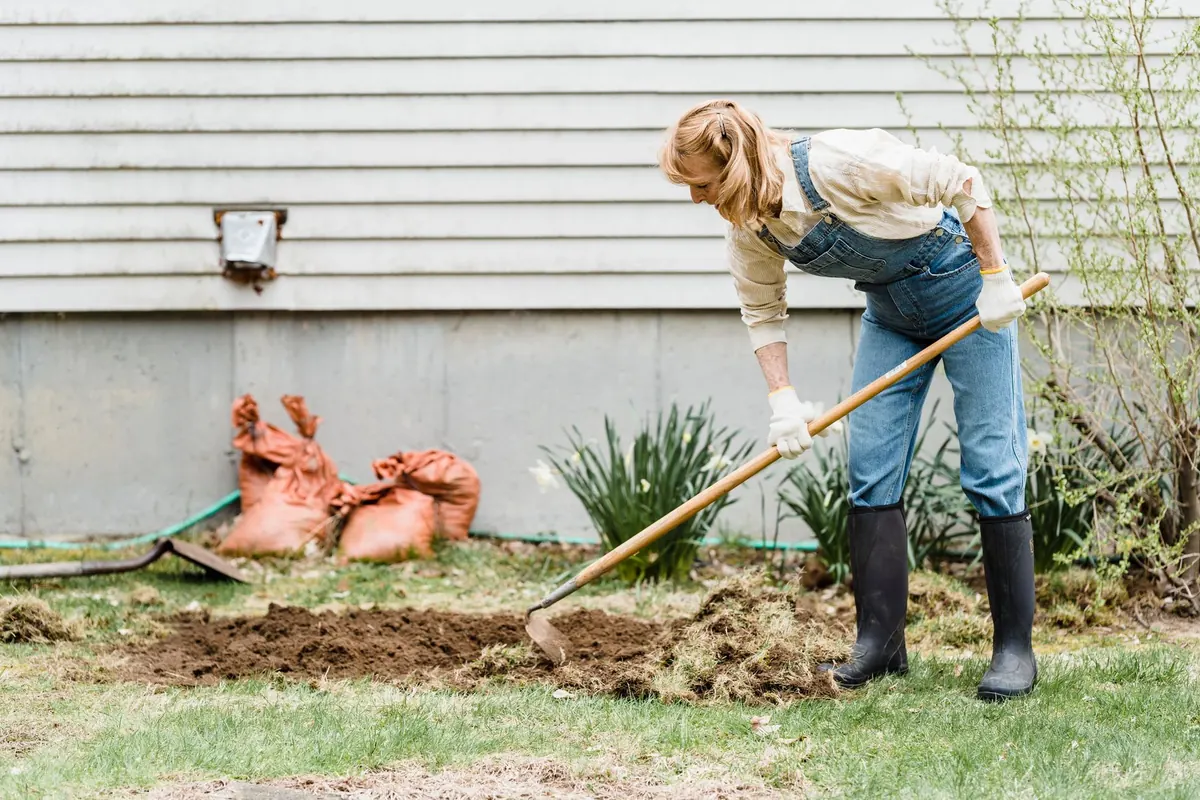
Photo: Airam Dato-on / Pexels
How clover, thyme and chamomile compare as low-water lawn substitutes for sunny UK gardens, with practical advice on...
A month-by-month plan for turning an ordinary lawn into a year-round larder for bees, butterflies and moths, from...
A practical guide to reliable shade-tolerant plants for north-facing and wooded UK gardens, with planting advice and...

Your hub for clover, lawns, and garden inspiration..
