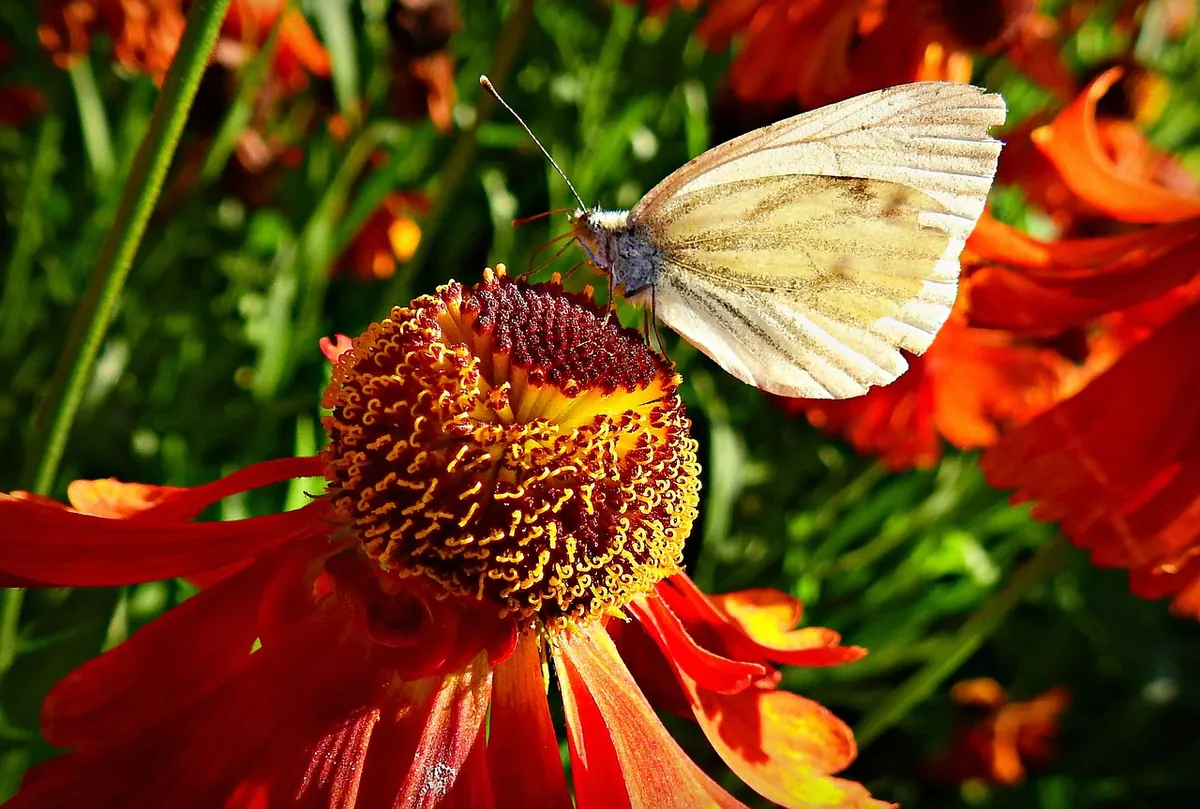
A lawn does not have to be a green desert. Kept a few centimetres longer, with a handful of flowers tolerated rather than poisoned, it becomes one of the most useful pit stops in the garden: a place where bees refuel on the way to the borders, butterflies bask in the afternoon sun, and moths find nectar after dark.
The work is not complicated, but it is seasonal. Get the timing right and you will spend less time mowing and spraying, not more. Here is a month-by-month checklist, from the first cut of spring to the quiet planning of winter.
Start with a high cut and a sharp blade. In March the grass is growing, but the soil is still cold and soft, so a scalp cut does more harm than good. Rake out dead thatch if it has built up, and only leave clippings on the surface when they are light — a thick layer will smother new growth underneath.
Then resist the urge to tidy everything. Dandelions and daisies open far earlier than most garden plants, and they are often the first proper meal a queen bumblebee gets after winter.
This is the season that decides how much wildlife your lawn supports. The single best trick is rotational mowing: divide the lawn into three rough bands, cut only one at a time, and move on to the next a fortnight later. There is always somewhere for insects to feed, and the lawn still looks cared for rather than abandoned.
Time your cuts for late afternoon or early evening. Bees and butterflies are winding down, and you are far less likely to catch one on a flower head. Remove the clippings rather than leaving them in rows — they block light and enrich the soil, which favours grass over flowers.
Drop pots of lavender, catmint, salvia, marjoram and thyme along the lawn edge, and let chives and oregano flower in the herb bed. For moths, add something scented after dark near a window or path: honeysuckle, evening primrose or jasmine.
If you want butterflies to linger, leave a scruffy strip — an unmown edge of longer grass, a patch of bare soil, a flat stone in full sun. Butterflies bask with their wings open to warm up, and they cannot do that on a close-cropped, striped sward.
Early autumn is the best sowing window of the year. The soil is still warm, rain does the watering for you, and seedlings get a head start before the cold arrives. If yellow rattle suits your soil, this is the month to sow it; it weakens grass and gives wildflowers room to compete.
Resist the urge to feed the lawn. Rich, fertilised grass simply crowds out the flowers you want. Scarify, top-dress thinly, and sow.
There is very little to do to the grass itself, and that is fine. Do not mow in frost or on waterlogged ground; you will compact the soil and leave scars that take until spring to grow out.
Use the quiet months for the jobs that make the rest of the year easier: sharpen or replace the mower blade, order your seed, and decide which patch you will leave long next summer. If you have ivy on a wall or in a hedge, leave it to flower — late bees and hoverflies rely on it when little else is open.
It is also worth walking the lawn after a wet spell and noting where it sits wettest. Drainage problems are far easier to fix in February than in June.
You do not need a wildflower meadow. A flowering lawn is a low-growing mix that survives regular cutting and still produces nectar. Sow into thin grass or bare patches, keep it damp, and be patient — most of these take a season to establish.
If you have room for a rougher edge, add knapweed, field scabious, meadow cranesbill or cowslip. They need to be left uncut from early summer, so keep them out of the mowing rotation.
Aim for a simple split: paths and sitting areas at 3–4cm, the main lawn at 5–8cm, and at least one generous patch left longer all summer. Mow at dusk, keep the blade sharp, remove clippings, and never reach for weed and feed. Set the mower one notch higher than you think you need — most pollinator-friendly lawns fail simply because they are cut too short, too often.
Expect it to look slightly uneven for a season or two while the flowering plants settle in. After that, the clover, selfheal and daisies fill the gaps, the mowing gets easier, and the buzzing starts before you have finished your first cup of tea.
Photo: MabelAmber / Pixabay
How clover, thyme and chamomile compare as low-water lawn substitutes for sunny UK gardens, with practical advice on...
A practical guide to reliable shade-tolerant plants for north-facing and wooded UK gardens, with planting advice and...
Compacted soil starves grass roots of air and water, causing puddles, moss and thin turf. Here's how to spot it and...

Your hub for clover, lawns, and garden inspiration..
