Clover lawns have moved from the margins of gardening fashion to something you see on plenty of UK streets — usually because someone grew tired of feeding, watering and reseeding a thirsty grass lawn. But "clover" covers a lot of ground, and the two species most often recommended for lawns behave quite differently once they are in the soil.
White clover is the one you already know, whether you realise it or not. Strawberry clover is quieter, tougher in awkward ground and far less common in gardens. Choosing between them comes down to four practical things: appearance, wear tolerance, soil preferences and the maintenance each one asks for.
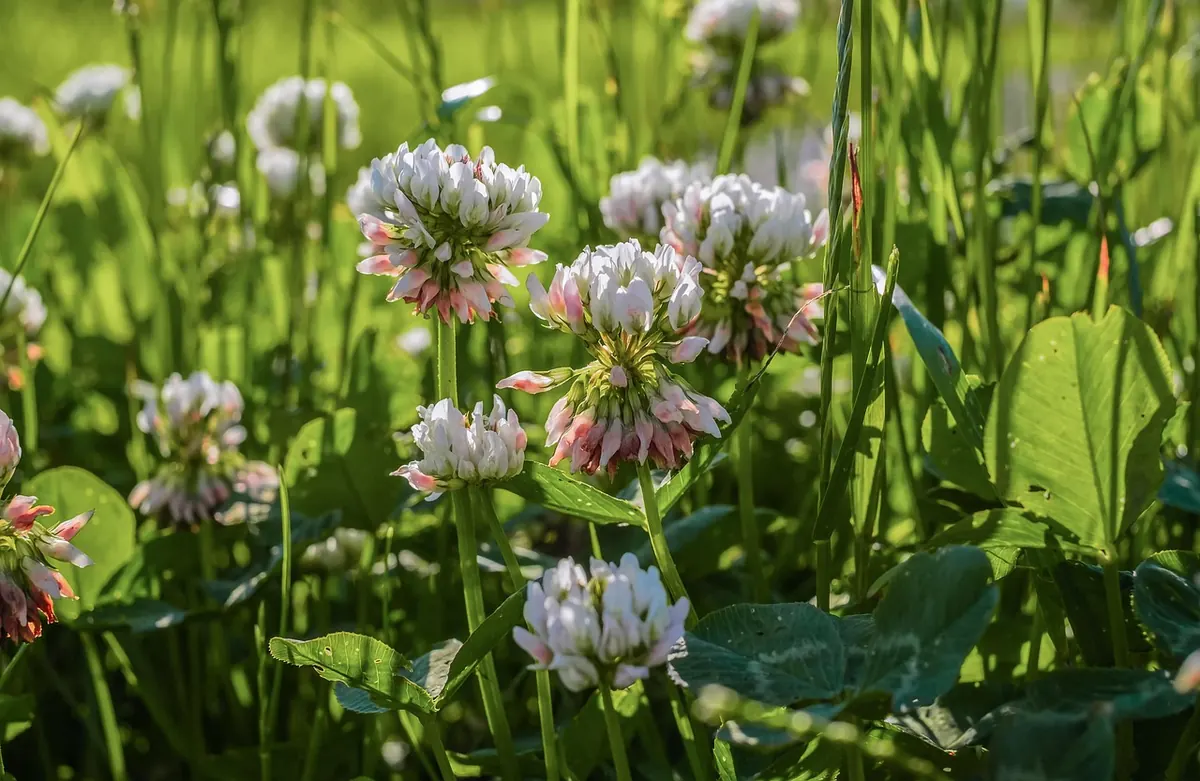
Low and creeping, with three rounded leaflets roughly one to three centimetres across. Many leaves carry a pale crescent or V-shaped watermark, which is the quickest way to identify it. From late spring into early autumn it throws up rounded white flower heads, occasionally flushed pink, about the size of a shirt button. It travels by stolons — stems that run along the surface and root at intervals — so a small patch becomes a broad one within a season or two. That is helpful in a lawn and a nuisance in a border. Left unmown it sits around 10–15cm; cut regularly it forms a dense, low mat. Smaller-leaved micro-clover cultivars are available and give a finer, more lawn-like finish.
Similar at a glance, but coarser. The leaflets are usually a little larger and greyer-green, and the leaf markings are fainter or absent altogether. It flowers a touch later, with pinkish-white heads, and the giveaway comes afterwards: the seed head swells into a fuzzy, reddish-brown ball that looks like a small strawberry. It creeps by stolons too, but it puts down a deeper, sturdier root system, which is the source of most of its advantages. In a lawn it can look slightly patchier and less uniform than white clover, and it is rarely sold as a pure lawn seed.
White clover is springy and self-repairing under moderate use, but it is soft. A well-worn route to the shed, a dog's patrol line or a goalmouth will thin out, and bare, muddy patches follow.
Strawberry clover is the tougher of the two. Its deeper roots hold ground better, it recovers from trampling, and it keeps going on compacted, heavy or occasionally waterlogged soil where white clover sulks. If your lawn is a thoroughfare rather than a showpiece, that matters more than looks.
Neither matches a good ryegrass-and-fescue lawn for heavy daily football, though. If children and dogs use the grass hard, a grass-dominant mix with a modest amount of clover is the sensible compromise, and a pure clover lawn is best kept for lighter-use areas. Whichever you choose, steer traffic onto stepping stones or a paved path in the worst spots.
White clover prefers a moisture-retentive but free-draining loam and a pH around 6 to 7. It will tolerate slightly acid and slightly alkaline ground, but it dislikes dry, hungry sand and deep shade. In a hot, dry spell it browns off and goes dormant, then greens up again after rain.
Strawberry clover is the problem-solver. It handles heavy clay, poor drainage, winter waterlogging, alkalinity and even salty ground — which is why it turns up on coastal verges, in pasture mixes on difficult fields and in amenity seed for awkward sites. Once established it is also more drought-tolerant than white clover, because its roots reach deeper. Very acid soil is where it struggles.
Both are legumes and fix their own nitrogen with the help of soil bacteria, so neither wants rich, heavily fed ground. Feed them and the grass around them simply outgrows them.
Whichever species you grow, the routine is broadly the same and lighter than for a traditional lawn.
Clover seed is small, so a little goes a long way — follow the rate on the packet rather than guessing. Sow into bare, lightly raked soil, or overseed into thin grass, then firm the surface so the seed makes contact and water gently. Spring and early autumn are the safest windows in the UK. Germination takes a week or two in warm, moist conditions, and the first proper mat forms over a couple of months. Keep foot traffic light until then. If you are sowing a mix, choose a fine-leaved grass such as creeping red fescue or a dwarf ryegrass so the clover is not swamped.
Don't convert the whole lawn at once. Pick a patch — a sunny corner, a strip beside a path — clear it, sow, and live with it for a season. You will learn quickly whether the look suits you and whether the wear is bearable.
Then decide. White clover gives you a softer, more uniform lawn with the classic look and a long flowering season. Strawberry clover gives you a tougher plant for difficult, wet or salty ground, at the cost of a slightly coarser, patchier appearance. On most UK garden lawns with reasonable soil, white clover is the easier and better-looking choice. On the awkward, heavy, waterlogged spots that defeat everything else, strawberry clover earns its place. And if you simply want the least fuss, mix a little of either into an existing lawn rather than replacing it — you get the nitrogen, the flowers and the green cover without losing the grass that already works.
Photo: Couleur / Pixabay

How clover, thyme and chamomile compare as low-water lawn substitutes for sunny UK gardens, with practical advice on...

A month-by-month plan for turning an ordinary lawn into a year-round larder for bees, butterflies and moths, from...
A practical guide to reliable shade-tolerant plants for north-facing and wooded UK gardens, with planting advice and...


Your hub for clover, lawns, and garden inspiration..
