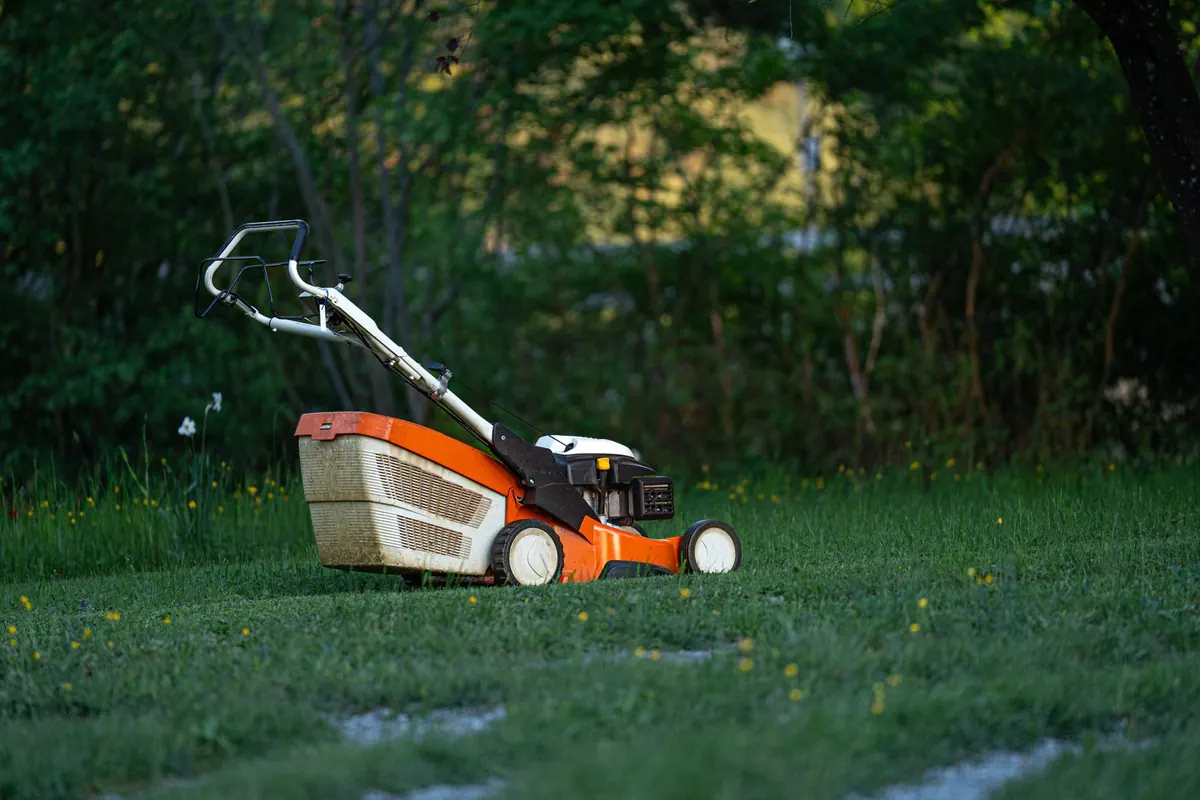
Most people mow a clover lawn the way they mowed the grass that came before it, then wonder why the flowers disappear by early summer. Clover and grass grow differently. Grass pushes new leaves up from the base; clover spreads along the ground on runners and sends its flowers up on stalks from fresh growth near the top of the canopy. Set the deck low out of habit and you cut away exactly the part you wanted to see. Get the height, frequency and timing roughly right, though, and a clover lawn stays thick, green and full of bloom with far less work than a conventional lawn.
White clover is a legume, not a grass. It creeps outward on stolons, roots as it goes, and pulls nitrogen out of the air with the help of bacteria in its roots. That has two consequences for mowing. First, clover does not need feeding the way grass does, and heavy nitrogen fertiliser will push the grass in a mixed lawn at the expense of the clover. Second, its leaves are thinner and softer than grass blades. A blunt blade tears them rather than slicing them, leaving ragged edges that brown off and make the whole lawn look tatty within a day or two.
Cut too short and you also remove the growing points clover relies on to spread. Bare patches open up, and grass, moss or weeds move in. The aim is to take off the top without scalping the runners underneath.
As a general starting point, keep a mixed grass-and-clover lawn at around 5–7 cm, and a pure clover lawn at roughly 4–5 cm during active growth. Never go below 4 cm, whatever the mower's lowest setting claims. The old rule of never removing more than a third of the leaf in one cut is a good one to hold on to; if the lawn has got away from you, raise the deck for the first pass and drop it slightly for the second a few days later.
In the main growing months, a mixed lawn usually wants a cut every 7–10 days. A clover-dominant lawn, or one you are managing for flowers, can go 10–14 days, and up to three weeks in midsummer if you are happy for it to look a little looser. Clover flowers sit above the leaves, so each cut takes the open blooms with it. Cutting less often simply means more flowers, more of the time.
Frequency should follow growth, not the calendar. If the lawn has not grown, skip the cut. In a drought, clover goes semi-dormant and may look brown and flat; leave it alone until rain returns. In winter, growth stops almost entirely — there is no need to mow at all, and you should never run the mower over frozen or frosted clover, which snaps the runners and leaves scars that take months to fill.
If bees and other pollinators are part of why you planted clover, mow in sections rather than all at once. Cut half the lawn one week and the other half a fortnight later, so there is always somewhere for insects to feed. In a small garden, three or four strips rotated through the summer works well. You can also leave the outermost metre unmown all season for a rough, flower-rich edge.
Time of day matters more than most people expect. Mow on a dry afternoon or early evening once the dew has lifted. Clover holds moisture, and cutting it wet smears the leaves, clumps the clippings and can spread fungal problems through the sward. In a heatwave, avoid the hottest part of the day; late afternoon gives the lawn the evening to recover.
A standard rotary or hover mower is perfectly suited to clover, provided the blade is sharp. Sharpen it or replace it at least once a season — with clover, the difference between a sharp and a dull blade is visible the same evening. Cylinder mowers can work if they are kept sharp and set high, but wiry clover runners have a habit of jamming the cutting reel if the lawn is even slightly long.
Leave the clippings on the lawn unless they are thick enough to smother the surface. Spread thinly, they return nitrogen and moisture. If you have taken off a lot in one go, rake them up or use them in the compost. Take care with strimmers along edges and around trees — it is easy to scalp clover in seconds in places where the mower cannot reach, and those scalped patches are where weeds appear first.
Clover is forgiving, and it tells you quickly when you have got it wrong: torn leaves, bare patches, shrinking flowers. If that happens, raise the deck, sharpen the blade and stretch the gap between cuts. Within a few weeks the runners will close over the gaps and the flower heads will come back. Watch the lawn rather than the calendar, mow dry and never low, and you will end up with a lawn that feeds the bees, stays green through summer and asks very little of you.
Photo: Joel Hägele / Pexels
How clover, thyme and chamomile compare as low-water lawn substitutes for sunny UK gardens, with practical advice on...

A month-by-month plan for turning an ordinary lawn into a year-round larder for bees, butterflies and moths, from...
A practical guide to reliable shade-tolerant plants for north-facing and wooded UK gardens, with planting advice and...


Your hub for clover, lawns, and garden inspiration..
